About
About me

Hi! My name is Bob Arthur, and I've been a software developer for over 25 years, based mostly on web development and service-based applications.
But even longer than that, I've loved cryptic crosswords. My habit of sitting at the bar of my local pub with the day's Scotsman and Times—unread, but pre-emptively folded to the back pages—led to people referring to me as "Crossword Bob", and, after a while, it sort of stuck.
I spend less time in pubs these days, but I still regularly (try to) solve the daily puzzles. However, of all the varieties of crosswords, my all-time favourite is definitely The Listener Crossword, published weekly in The (UK) Times*. It's a notoriously tough puzzle, usually involving a barred grid, a different theme and, in particular, different rules each week: Entries without clues, clues without entry numbers, misprints in clues, circular grids, or even, in at least one instance (Stealth, by Dimitry), no grid at all. They seem utterly impenetrable at first, but there is no better penny-drop moment than when the theme finally reveals itself.
I have enormous respect for the many setters of this wonderful series. Maybe one one day I'll have the chance to join them, though I won't be holding my breath!
* I am in no way affiliated with The Times or The Listener Crossword.
About Crossword Wrangler
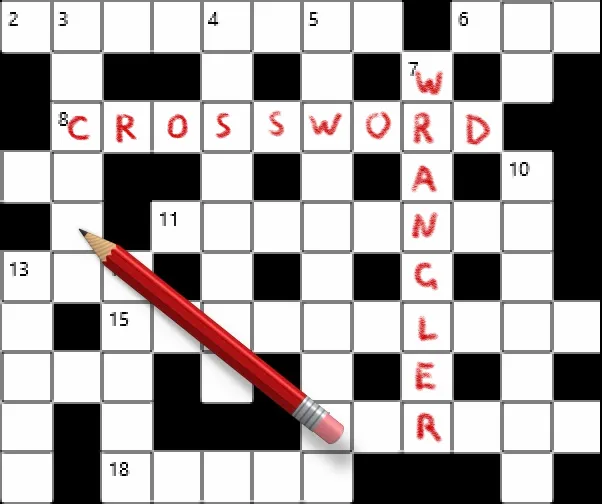
As something of a "between jobs" learning exercise, I decided to try using a technology that was totally new to me, and decided to have a go at writing a .NET MAUI application. Inspired by Ross Beresford's seminal packages Tea and Sympathy, sadly no longer available, I thought I'd try my hand at writing my own crossword creation app with a modern-day user experience.
From day one, I knew it would have to include the ability to produce crosswords such as The Listener. This means barred grids, but also puzzles that bend (or break) the usual rules of crossword construction. Some crossword setting apps I've used in the past seemed to have approached the challenge of flexibility by basing their crossword models around a grid of generic cells, each having its own set properties, such as whether or not it is filled (blocked), whether it contains a number, bars, or other decorations. The crossword structure was then derived from the grid.
From my time as a developer, I've come to appreciate the value of semantic design. Rules should apply to things, not just to their representations. A crossword is not a collection of cells from which structure can be derived; the structure is the crossword. I wanted to see if I could apply a semantic approach to crossword setting; treating the crossword as a collection of its entries and preserving strong connections between the entries, their grid positions and their clues, while still delivering the flexibility required to handle the loose rules of puzzles like The Listener.
Somewhere along the way, I started to think that it might just work well enough to be worth releasing it to the public, and Crossword Wrangler is what came out of that. I hope others who try it will find it enjoyable, and perhaps even useful. Feedback would be more than welcome: email feedback@crossword-wrangler.co.uk.